Who should read this book?
This book is for people who bring others together to achieve an outcome.
That includes:
facilitators;
emerging facilitators;
those considering a career change;
managers and team leaders;
project and program managers;
industry and government facilitators alike;
policy and stakeholder engagement professionals;
executives and managers who convene complex conversations;
people who have completed some form of facilitation training and want to go deeper.
If facilitation is becoming part of your work, this book is designed to help you develop it from a useful skill into a thoughtful practice.
Some conversations are too important to leave to chance
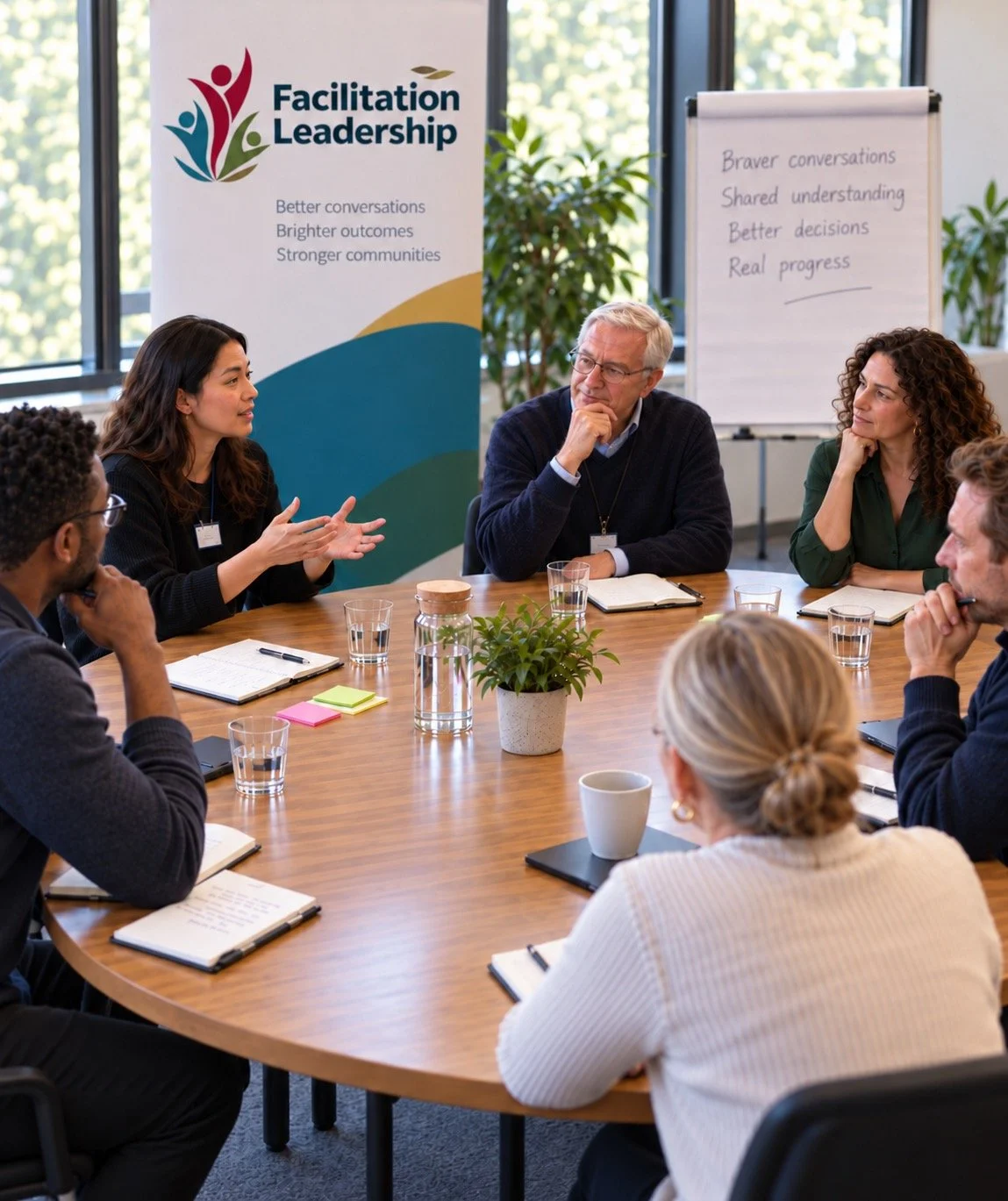
Whether you are developing strategy, engaging stakeholders, holding a planning day, or workshopping a project, the conversation matters.
Good facilitation helps people take part, think clearly, and work through complex issues. It also helps the group move towards decisions and action.
A facilitator manages the process so leaders can take part in the conversation.
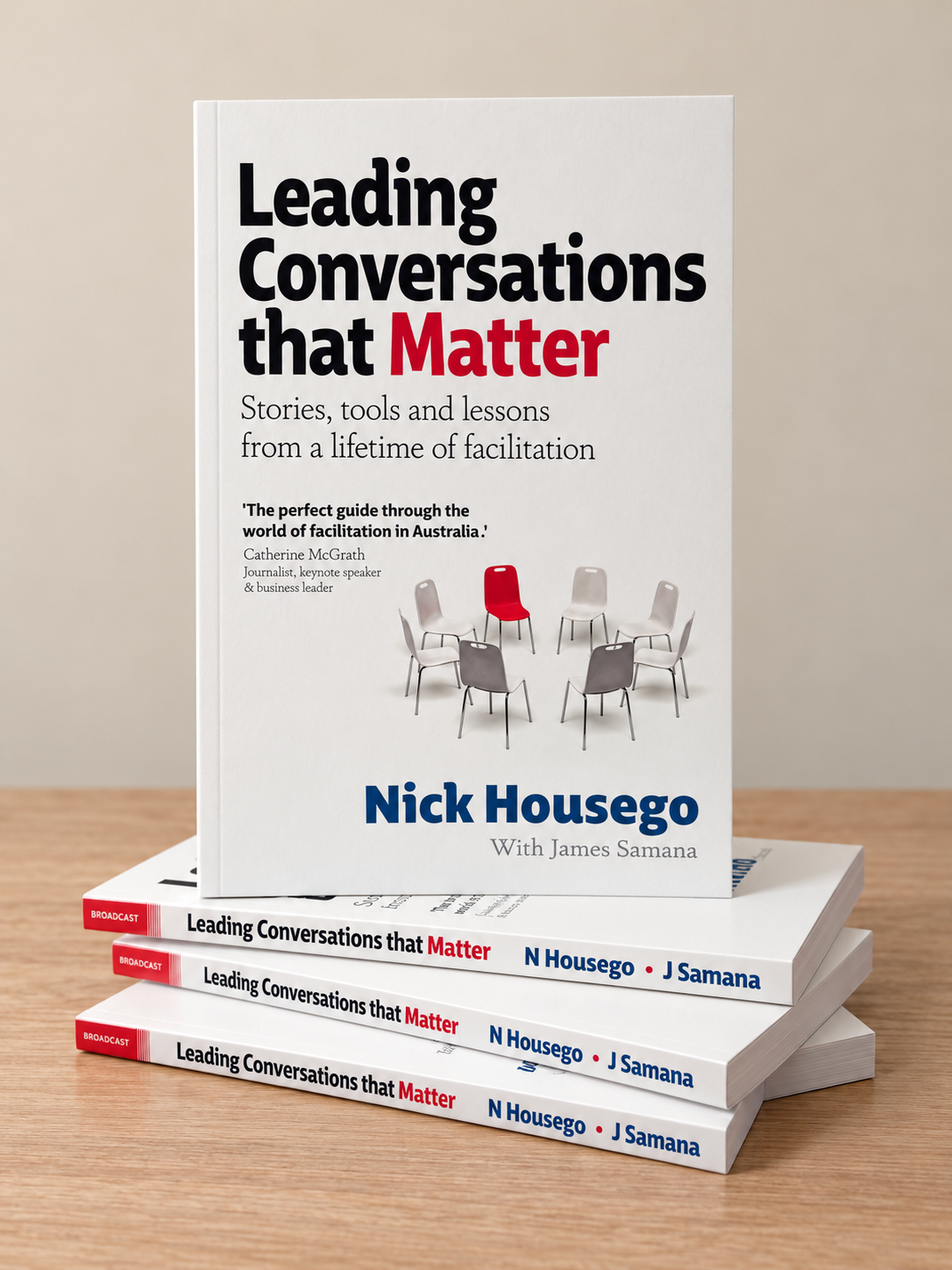
These concepts are more fully explored in ‘Leading Conversations that Matter’, in particular in Chapters 5, and the table, ‘10 Reasons why I use facilitators’ by Philip Hind.
Ready to step further into facilitation?
Facilitation is learned by doing.
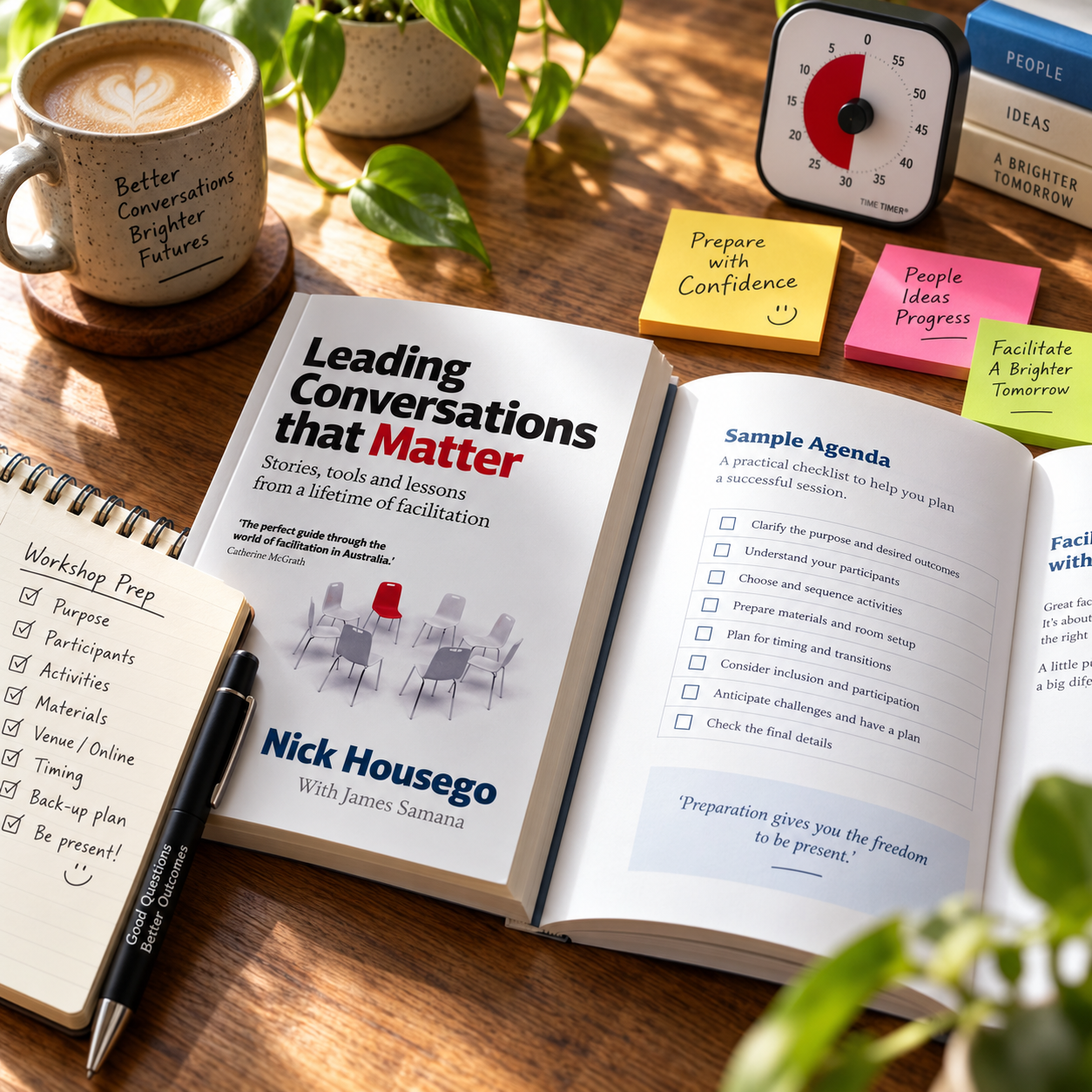
If you are beginning to facilitate more often, or want to build confidence in the work you are already doing, Leading Conversations that Matter can help you take the next steps.
The book brings together practical lessons from a lifetime of facilitation. You’ll find preparation checklists, sample agendas, practical tools and models, and Nick’s key lessons at the end of each chapter.
It is not a script for how every session should run. It is a guide to help you prepare well, notice more, respond with discernment, and keep developing your own practice.
Be brave. Step into the work. Learn from experience. Keep going. We need more facilitators.
Be brave enough to facilitate
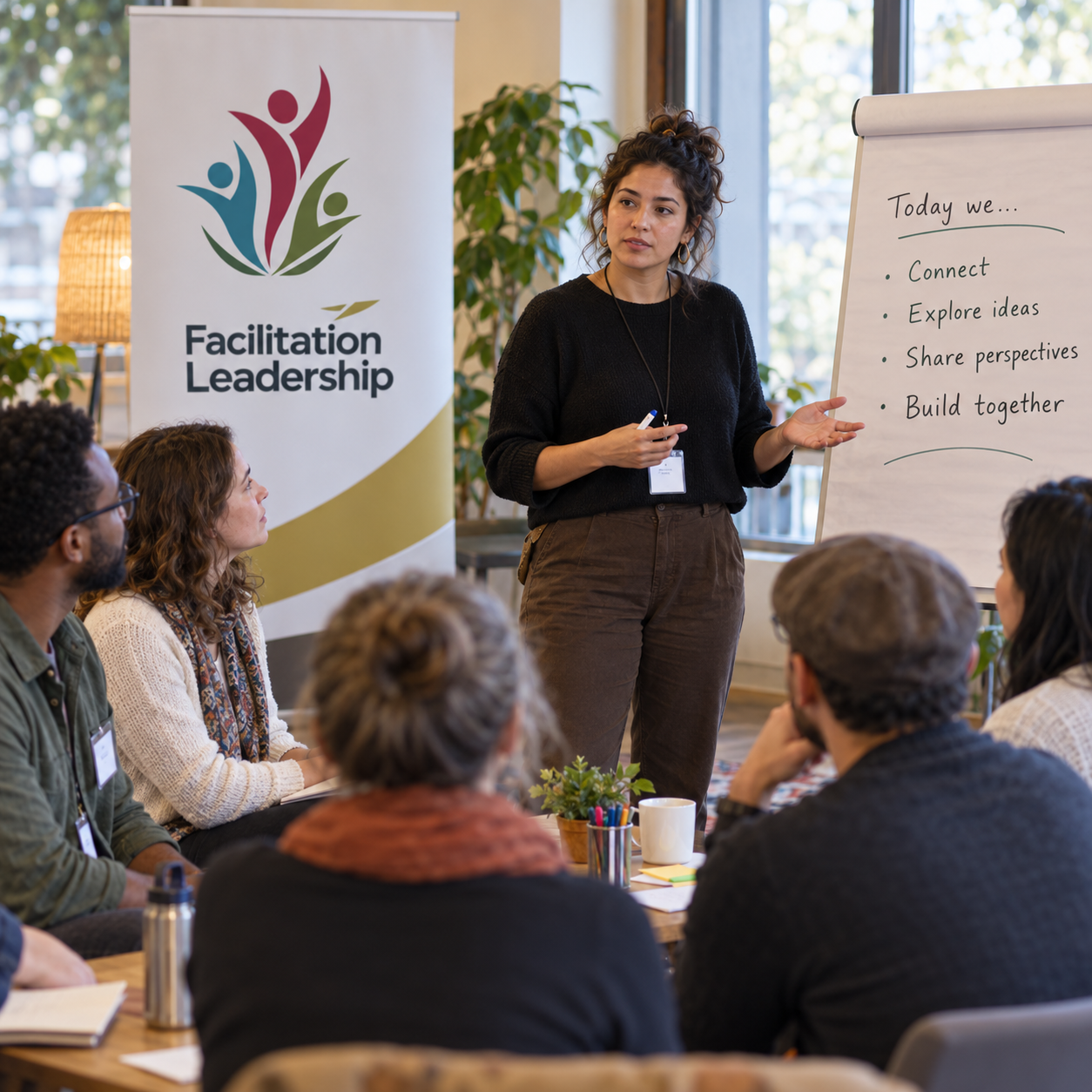
Confidence grows through practice. The book gives you practical guidance to help you step into the role, try more, and develop your own facilitation presence. If at first you don’t succeed, try, Try, TRY Again! Keep practicing.
Prepare with confidence
Use practical checklists, sample agendas, and preparation prompts from the book to help you think through purpose, participants, timing, and process before the facilitation begins.
Turn experience into better practice
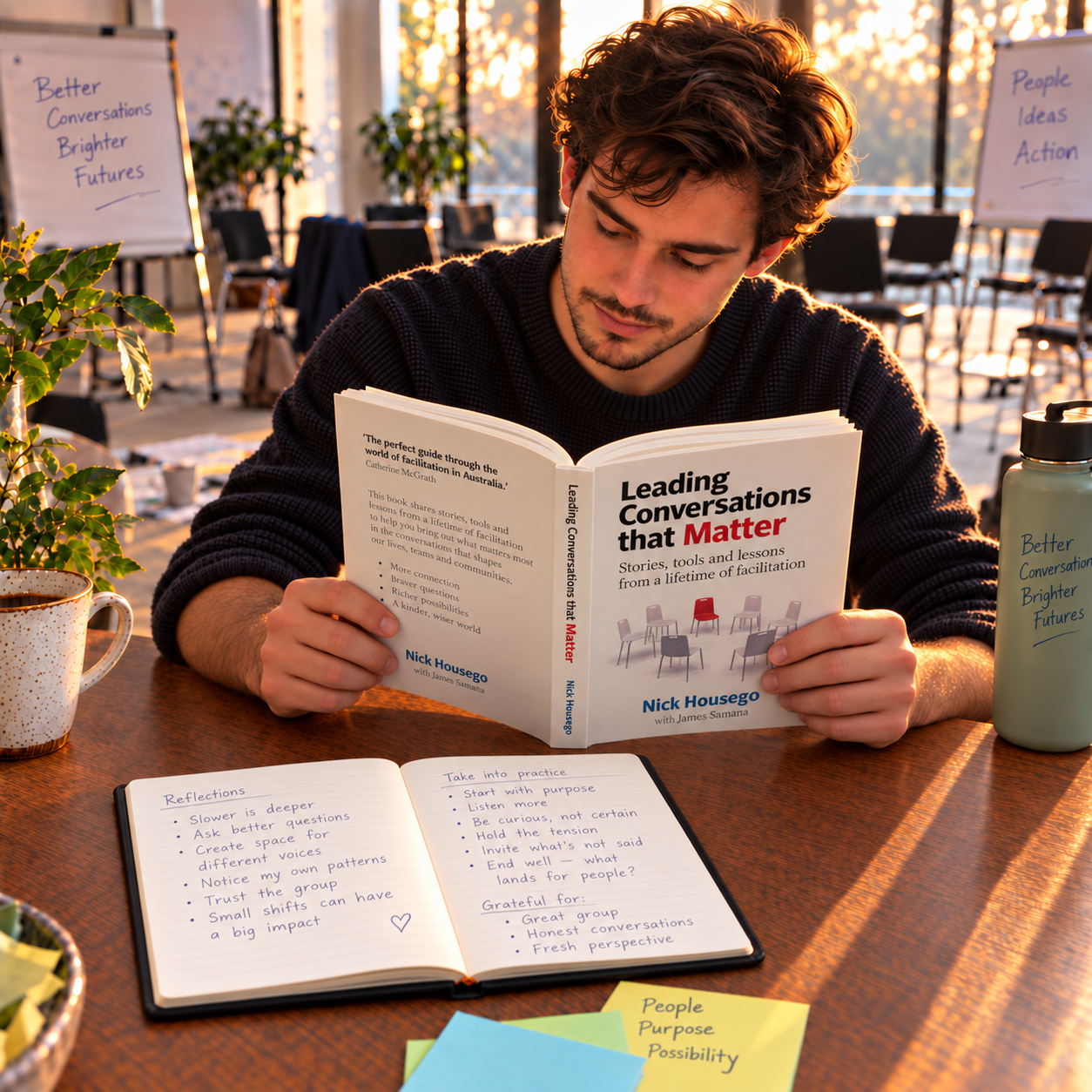
Draw on the practical tools in the book, including the STAR methodology in Chapter 12, as you prepare and facilitate. Then use Nick’s lessons from experience to reflect on what happened, learn from each session, and keep building your judgement as a facilitator.